

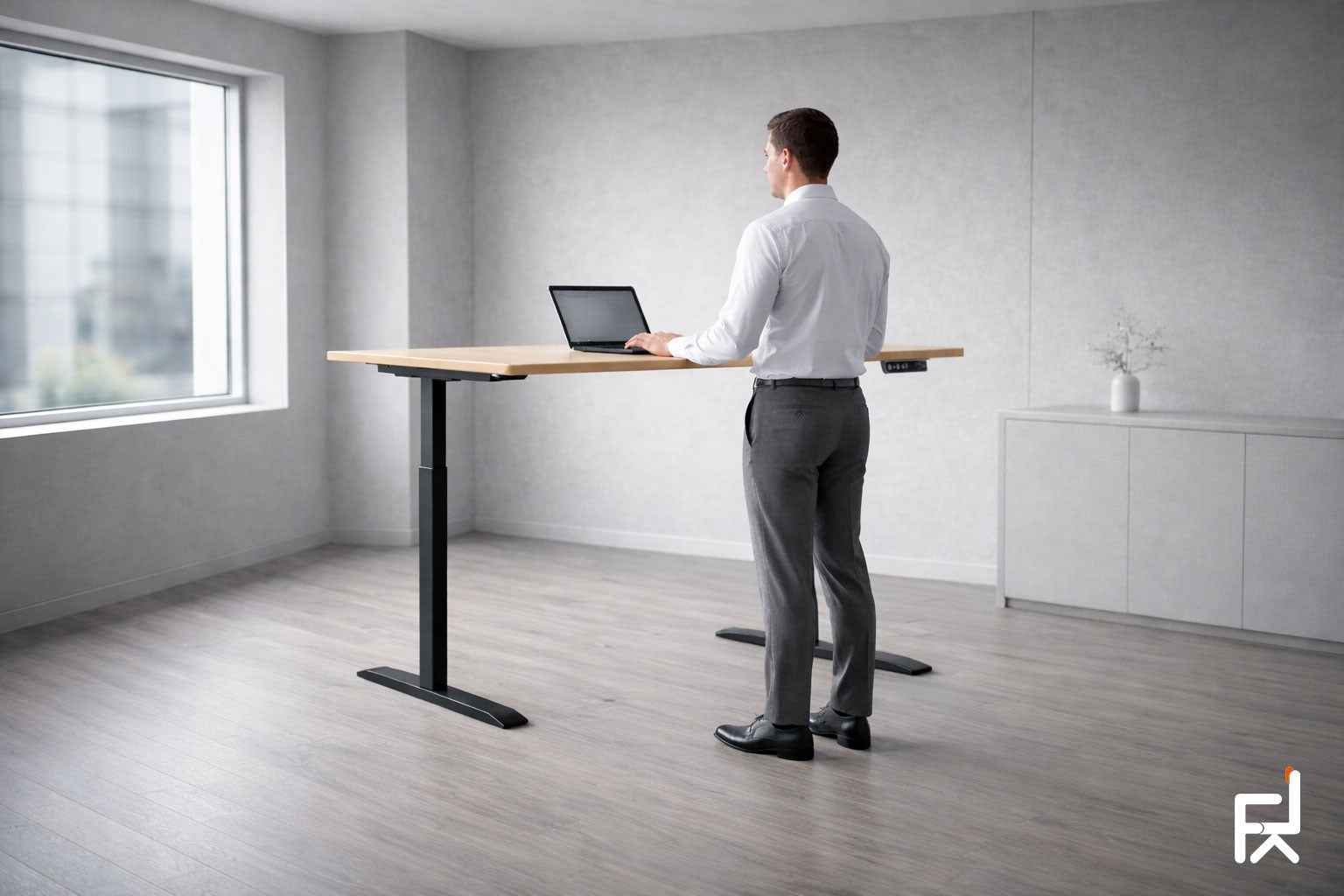
Standing Desks Won’t Fix Your Back. And That’s the Lie No One Talks About.

In recent years, social media has been conveying a singular message:
“Sitting is killing you. Standing desks are the solution.”
Purchase one. Be upright more. Straighten your back. Stay efficient. Stay fit.
Yet, there’s an uneasy reality that those in the furniture sector prefer to keep unspoken:
Standing desks don’t fix your body.
They expose how badly you’ve been using it.
This blog is for you if you've ever experienced discomfort after transitioning to a standing desk.
The Internet Is Divided — And Both Sides Are Loud
Scroll LinkedIn, Instagram, Reddit, or X and you’ll see two completely opposite camps arguing nonstop.
Camp #1: “Standing desks changed my life”
his group dominates professional platforms.
You’ll see comments like:
“My back pain disappeared once I stopped sitting.”
“Standing desks saved my productivity.”
“Sitting is the new smoking.”
These posts get thousands of likes.
They feel motivational. Clean setups. Good lighting. Success vibes.
And here’s the thing: they’re not lying.
But they’re also not telling the full story.
Camp #2: “Standing desks are a scam”
This group lives in comment sections and forums.
Typical responses:
-
“Standing all day destroyed my knees.”
-
“My lower back pain just moved.”
-
“Another Silicon Valley trend sold as health.”
This side sounds bitter. But again — they’re not wrong either.
So what’s actually happening?
The Lie Isn’t the Standing Desk
The Lie Is That Standing Alone Is Healthy
Here’s the part brands avoid admitting:
Standing desks were never designed for standing all day.
They were designed to address a particular issue:
👉 Fixed position
Whether you are seated or upright, remaining in a single position for an extended period stresses the same muscles, limits circulation, and leads to exhaustion.
Numerous studies on occupational health and ergonomics reach the same conclusion:
- Extended periods of sitting lead to musculoskeletal stress.
- Extended standing leads to fatigue in the lower limbs and increased pressure on the lumbar region.
- Static posture is the genuine adversary.
Remaining in one place is not progress.
It’s merely standing… upright
Why Standing Feels Amazing at First (Then Starts Hurting)

Most people go through the same cycle.
Phase 1: Immediate relief
After years of sitting:
-
Standing activates unused muscles
-
Pressure shifts
-
Pain temporarily decreases
This is where social media success stories are born.
Phase 2: Adaptation
After weeks:
-
Standing becomes static
-
Fatigue builds
-
Blood circulation slows again
Your body adapts — and the benefits flatten.
Phase 3: New pain, new confusion
Now people say:
-
“My feet hurt”
-
“My knees hurt”
-
“My lower back hurts”
And instead of questioning the routine, they blame:
-
The desk
-
Their body
-
Themselves
Rarely the advice.
What the Research Actually Agrees On

Across ergonomics and workplace health literature, one thing is consistent:
Health improves with movement frequency — not posture choice.
What matters most:
-
Changing position every 30–60 minutes
-
Alternating between sitting and standing
-
Micro-movement (leaning, shifting weight, short walks)
-
Correct desk height for each position
Standing desks help only when they enable movement.
They are a tool.
Not a cure.
So… Are Standing Desks a Scam?
No.
But the way they’re marketed often is.
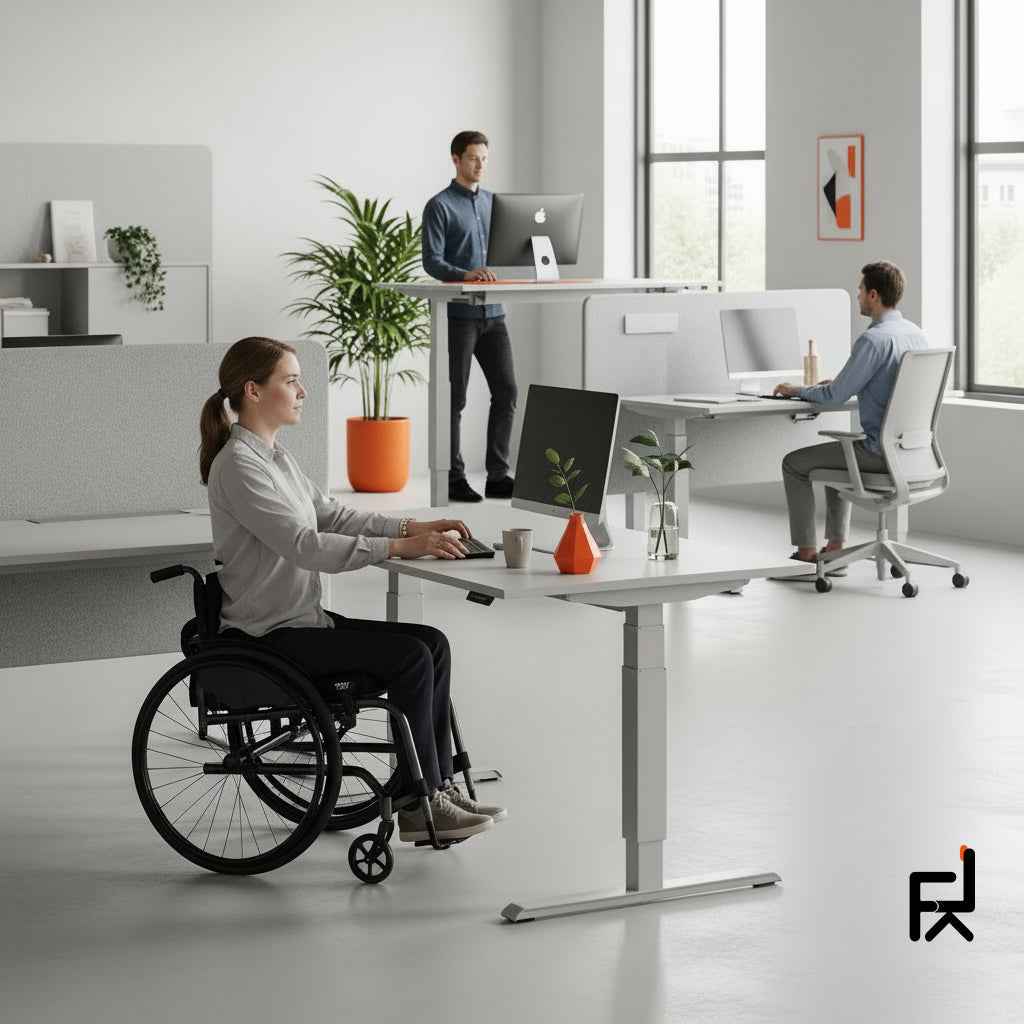
Standing desks:
✔ Help break long sitting cycles
✔ Enable posture variation
✔ Support healthier routines
They do not:
❌ Fix bad posture by themselves
❌ Replace movement
❌ Cancel years of sedentary behavior
If you stand all day without moving, you’ve just traded one problem for another.
Why We Still Believe in Standing Desks at FlakeTech
Because we don’t sell them as magic.
We see them as:
-
A flexibility tool
-
A movement trigger
-
A long-term health enabler — when used right
The healthiest workspace isn’t:
-
Sitting all day
-
Standing all day
It’s changing positions without thinking about it.
The Real Takeaway
Standing desks don’t fix your back.
Movement fixes your back.
Standing desks don’t create productivity.
Good habits do.
Furniture doesn’t save you.
How you use it does.
Final Thought (Mic Drop)
If your standing desk hurts, it’s probably not broken.
Your routine is.
And once you understand that, your workspace finally starts working with you — not against you.

Leave a comment
This site is protected by hCaptcha and the hCaptcha Privacy Policy and Terms of Service apply.